
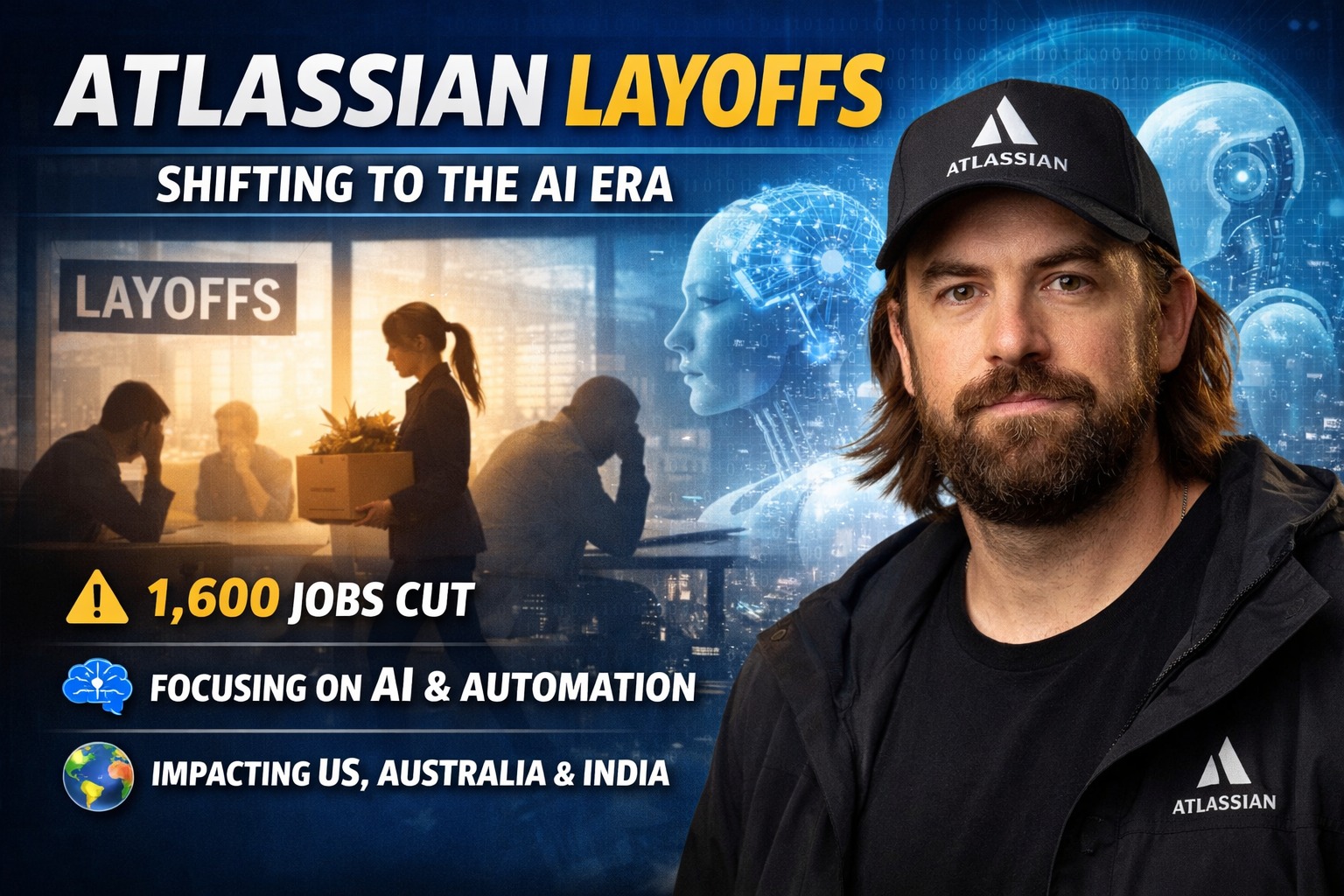
Global software company Atlassian has recently announced a significant round of layoffs, revealing plans to reduce approximately 10% of its global workforce, affecting around 1,600 employees.
Atlassian is widely known for developing popular collaboration and project management tools such as Jira, Confluence, and Trello, which are used by millions of teams and organizations around the world.
Why Atlassian Is Cutting Jobs
According to Atlassian’s co-founder and CEO Mike Cannon-Brookes, the technology industry is rapidly moving toward an AI-driven future, and companies must adapt their strategies to remain competitive.
He explained that the restructuring is part of a broader effort to focus more heavily on artificial intelligence, automation, and next-generation collaboration tools.
Key reasons behind the layoffs include:
Shifting company priorities toward AI-focused products and services
Changes in the types of skills required in the modern tech workforce
The need to reallocate resources to innovation and future technologies
Regions Most Affected
Reports indicate that the layoffs are distributed across several regions:
North America – around 40%
Australia – around 30%
India – around 16%
The company stated that affected employees will receive severance packages and support services to help them transition to new opportunities.
A Broader Trend in the Tech Industry
Atlassian’s move reflects a broader trend across the global technology sector. Many tech companies are restructuring their workforce as they increase investments in artificial intelligence, machine learning, and automation.
Industry analysts believe that in the coming years:
Demand for AI and data-related skills will continue to grow
Automation will reshape many traditional roles
Companies will increasingly prioritize innovation and digital transformation
Conclusion
Atlassian’s decision highlights how rapidly the tech landscape is evolving in the age of artificial intelligence. As companies invest more heavily in AI technologies, workforce restructuring may become more common across the industry.
For professionals working in technology, the message is clear: adapting to new technologies and continuously upgrading skills will be essential in the AI-driven future.




Very Impressive
Sushma Swaraj
March 15, 2026 am31 5:51 AM