
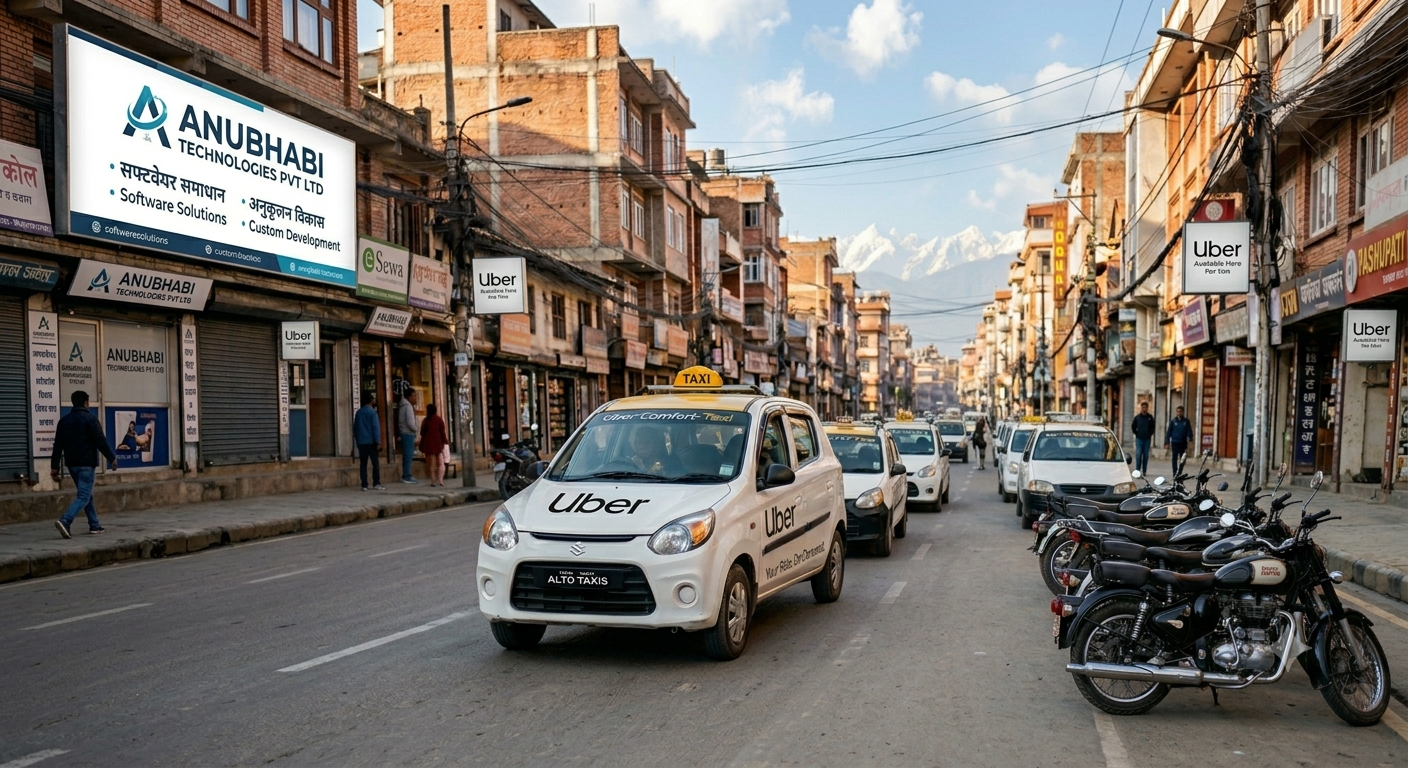
When Silicon Valley tech giant Uber officially launched in Nepal, it turned a lot of heads. The immediate question echoed across the tech and business world: Why Nepal?
Uber has famously fought grueling legal battles, regulatory crackdowns, or walked away from several major global territories like Southeast Asia (selling to Grab), China (selling to Didi), and parts of Europe. Yet, it chose to plant its flag in Kathmandu.
The move isn’t a random experiment. It is a highly calculated, strategic bet on a fast-evolving digital landscape, a tourism goldmine, and a changing political climate.
1. The "Seamless App" Tourism Loop
One of Uber’s biggest competitive advantages in expanding to Nepal is its existing global user base. Nepal’s tourism industry is experiencing a massive post-pandemic boom, welcoming hundreds of thousands of travelers every year from countries where Uber is already a household name—such as India and the United States.
When an American or Indian traveler touches down at Tribhuvan International Airport, they don't want the friction of downloading a regional app, verifying a local SIM card, or setting up a new digital wallet. They can simply open the exact same Uber app they use back home and instantly book an Uber Go, Uber Comfort, or an Uber Bike. By leveraging international traveler traffic, Uber unlocks immediate, high-value demand without heavy local marketing costs.
2. A Tested, Hyper-Maturing Ride-Hailing Market
Expanding into a brand-new country requires massive user education. Fortunately for Uber, local and regional players like Pathao and inDrive have already done the heavy lifting.
The Nepali workforce and consumer base are thoroughly educated on how ride-hailing works. Thousands of smartphone-wielding motorcycle riders and taxi drivers understand the gig economy, and millions of passengers are already accustomed to bypassing traditional taxi street-hailing. Uber isn’t introducing a new behavior; it is simply swooping in to offer a globally trusted alternative to an already thriving ecosystem.
3. The New "Youth-Led" Government and Legal Safeguards
Historically, ride-sharing platforms in Nepal operated in a frustrating legal gray area, often facing crackdowns from traffic police due to outdated transport laws.
However, Uber’s regional executives pointed to Nepal's current youth-led political climate as a massive green light. The government is actively drafting specific ride-sharing legislation. For a massive multinational company like Uber, entering a market that is actively legalizing and regulating the sector offers the compliance stability they need for a long-term, decade-plus commitment.
4. Flexible Sandbox Testing (Subscriptions vs. Commissions)
Nepal serves as an excellent, high-density testing ground for new business models. In Nepal, Uber partnered with local vendor Taximandu and is testing a hybrid strategy. They are experimenting with:
- The Commission Model: Taking a percentage cut of the ride fare (Uber's traditional global model).
- The Subscription Model: A system successfully deployed in India where drivers pay a flat, predictable monthly fee to use the platform and keep 100% of their actual ride fares.
Because Kathmandu is dense yet geographically contained, Uber can easily pivot and optimize these models before scaling them to other emerging economies.
The Ride Ahead: Local Competition
Uber is stepping into a market that is highly competitive. They aren't just fighting for passengers; they are fighting for drivers.
| Platform | Core Strength | Strategy |
|---|---|---|
| Pathao | Household name brand recognition. | Strong ecosystem across two-wheelers, food delivery, and logistics. |
| inDrive | High popularity due to passenger/driver fare negotiation. | Zero or very low initial commission structures for drivers. |
| Uber | Global network effects, trust, and flawless map tech. | Capturing foreign tourists and providing premium fleet options. |
| Yango | Ultra-low entry pricing and massive driver incentives. | Disrupted |
The Takeaway: While Uber has chosen to exit cutthroat, multi-billion-dollar cash burn wars in places like China, its arrival in Nepal is a textbook example of "smart expansion." By targeting a tourist-heavy, digitally ready, and legally maturing market, Uber is showing that sometimes the best growth opportunities aren't in the biggest countries, but in the ones ready to move forward.



Comments (0)
No comments yet. Be the first to comment!